
Oak Park Lawn Mowing Services
Choose our lawn mowing service for reliable, professional results that keep your yard looking its best all season long. We combine local expertise, attention to detail, and top-quality equipment to ensure your lawn is healthy, beautiful, and hassle-free.
Get a Free QuoteOur Oak Park Landscaping & Yard Care Services
When to Schedule Lawn Mowing in Oak Park, IL – Seasonal Guide
In Oak Park, IL, the best times to schedule lawn mowing are closely tied to our region’s unique climate and neighborhood characteristics. The mowing season typically begins in late April, after the last frost, and continues through October. Early spring brings rapid grass growth, especially in areas like the Frank Lloyd Wright Historic District and along the tree-lined streets near Scoville Park, making regular mowing essential to maintain a healthy, tidy appearance. As summer approaches, fluctuating humidity and the risk of drought—common in the Midwest—require careful monitoring of both mowing frequency and grass height to prevent stress on your lawn.
Local environmental factors such as dense shade from mature oaks, variable soil types from the River Forest border to the Austin neighborhood, and municipal guidelines all play a role in determining the optimal mowing schedule. For example, shaded lawns near Mills Park may grow more slowly, while open, sun-exposed yards can require more frequent attention. It’s also important to stay informed about any municipal restrictions or recommendations, which can be found on the Village of Oak Park Official Website, to ensure your lawn care practices are both effective and compliant.
Local Factors to Consider for Lawn Mowing in Oak Park
- Tree density and shade coverage (affects grass growth rate)
- Soil type and drainage (impacts mowing frequency and equipment choice)
- Seasonal precipitation and drought risk
- Terrain and yard slope (influences mowing safety and technique)
- Municipal restrictions or recommended mowing times
- Proximity to parks or historic districts (may have additional guidelines)
Benefits of Lawn Mowing in Oak Park
Professional Lawn Care Experts
Consistent Scheduling
Enhanced Curb Appeal
Time-Saving Services
Eco-Friendly Practices
Reliable Local Team
Oak Park Lawn Mowing Types

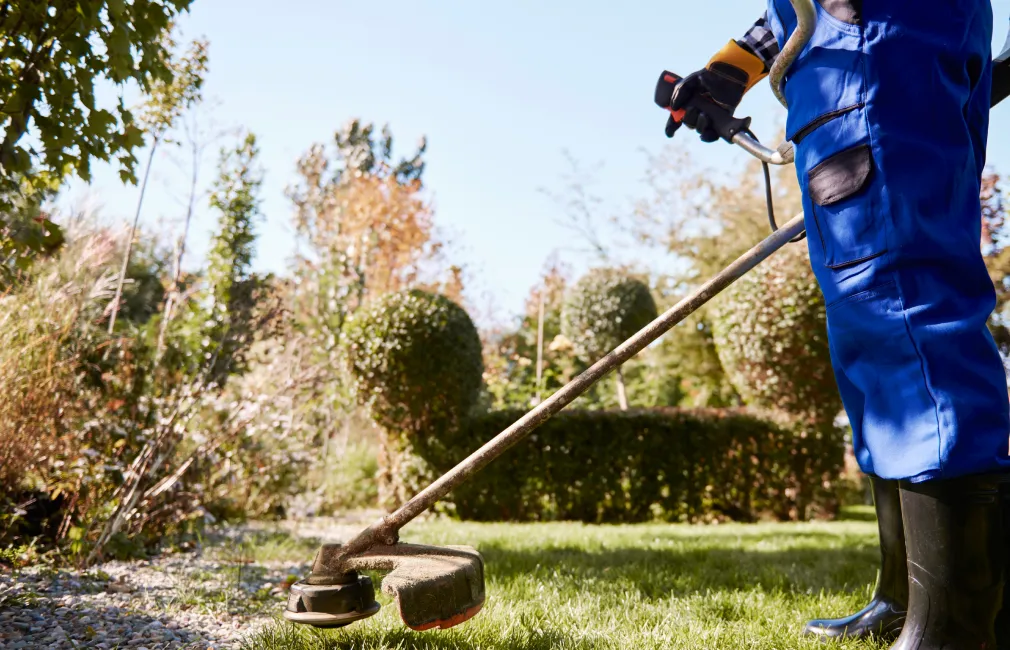
Standard Lawn Mowing
-
Mulching Mower Service
-
Bagging and Clipping Removal
-
Edging and Trimming
-
Seasonal Clean-Up Mowing
-
Commercial Property Mowing
-
Eco-Friendly Electric Mowing
Our Lawn Mowing Process
Site Evaluation
Lawn Preparation
Mowing Execution
Edging and Trimming
Cleanup
Why Choose Oak Park Landscape Services
-
Oak Park Homeowners Trust Us
-
Expert Lawn Maintenance
-
Reliable Seasonal Care
-
Competitive Pricing
-
Professional Team
-
Satisfaction Guarantee
-
Personalized Service
Contact Oak Park’s Department of Public Works for Grass Clipping Management & Municipal Composting Programs
Oak Park’s Department of Public Works oversees comprehensive grass clipping management, promoting grasscycling as the preferred method to return 25% of a lawn’s annual nitrogen needs and reduce fertilizer use by the same amount. Residents are encouraged to use mulching mowers and follow the One-Third Rule to minimize excess clippings. From April through November, seasonal yard waste collection is available, requiring paper bags or rigid containers—plastic bags are strictly prohibited. The municipal composting program accepts grass clippings, with finished compost and mulch available for residents. Strictly never dispose of clippings in streets or storm drains to protect the Lake Michigan watershed and comply with the Illinois Environmental Protection Act (415 ILCS 5). For more information:
Oak Park Department of Public Works
201 South Boulevard, Oak Park, IL 60302
Phone: (708) 358-5700
Official Website: Oak Park Public Works Department
Professional Mowing Standards & Turf Health Principles for Oak Park’s Heavy Clay Soils
Oak Park’s lawns are rooted in heavy clay soils (Drummer silty clay loam or similar, per USDA Web Soil Survey), which require careful mowing practices to prevent compaction and rutting. Adhering to the One-Third Rule (never remove more than one-third of the grass blade at once) is essential. Mowing heights should be:
- Kentucky bluegrass: 2.5–3.5 inches
- Perennial ryegrass: 2–3 inches
- Turf-type tall fescue: 3–4 inches
- Fine fescue: 2.5–3.5 inches Blades must be sharpened every 20–25 hours of use to ensure clean cuts and reduce disease risk. Regular turf health assessments are vital, monitoring for grubs, billbugs, fungal diseases, and drought stress, with support from University of Illinois Extension.
Oak Park Environmental Commission Guidelines for Mowing Near Wetlands & Protected Areas
The Oak Park Environment and Energy Commission provides oversight for mowing near sensitive areas, requiring buffer zones of 10–25 feet from wetlands and streams, and establishing no-mow zones where necessary. Seasonal restrictions protect wildlife during the March–August breeding season. On slopes, maintain a minimum mowing height of 3–4 inches to prevent erosion, especially in clay soils. Habitat integration is encouraged through selective mowing, supporting prairie restoration and pollinator gardens. Coordination with the Cook County Forest Preserve District and DuPage County Forest Preserve District ensures compliance with regional conservation goals. For guidance:
Oak Park Environment and Energy Commission
123 Madison Street, Oak Park, IL 60302
Phone: (708) 358-5778
Official Website: Oak Park Environment and Energy Commission
Oak Park Municipal Ordinances for Mowing Equipment Operation & Noise Control
Oak Park enforces strict municipal ordinances for mowing equipment operation. Permitted hours are typically 7:00 AM–9:00 PM weekdays and 8:00 AM–9:00 PM Saturdays; Sunday and holiday restrictions may apply—always verify local codes. Noise ordinances may specify decibel limits, especially for gas-powered equipment. Commercial services must adhere to licensing and operational standards. Community consideration is required, including advance neighbor notification for extended operations and coordination with municipal events. Enforcement is managed by the Police Department and Code Enforcement, with penalties for violations. For reporting and compliance:
Oak Park Police Department
123 Madison Street, Oak Park, IL 60302
Phone: (708) 386-3800
Official Website: Oak Park Police Department
Seasonal Mowing Calendar & Weather Coordination for Oak Park’s Climate Zone 5a-6a
Oak Park’s climate (USDA Zones 5a–6a) requires seasonally adjusted mowing. In early spring (April–May), begin mowing when grass reaches 4–5 inches, gradually reducing height as growth resumes. Peak growing season (May–June) calls for weekly mowing at 3–4 inches. During summer (July–August), increase height to 3.5–4 inches for drought tolerance and reduce frequency during heat or dormancy. Fall (September–October) involves regular mowing and a final cut at a slightly lower height for winter. Avoid mowing saturated clay soils, especially after spring rains or summer storms, and never mow during heat waves above 90°F. For local weather updates:
National Weather Service Chicago
333 West University Parkway, Romeoville, IL 60446
Phone: (815) 834-1435
Official Website: National Weather Service Chicago
Stormwater Management & MS4 Compliance: Keeping Clippings Out of Oak Park’s Storm Drains
Oak Park’s MS4 permit under the Clean Water Act mandates strict best management practices to protect the Lake Michigan watershed. Never allow grass clippings to enter streets, storm drains, or catch basins. Use mulch-mowing to return clippings to the turf, and immediately sweep any debris from impervious surfaces. Equipment wash water must be managed on permeable surfaces, away from storm drains, using biodegradable cleaners. These practices reduce nutrient runoff by 30–40%, especially important for heavy clay soils. For water quality and compliance information:
Illinois Environmental Protection Agency
1021 North Grand Avenue East, Springfield, IL 62702
Phone: (217) 782-3397
Official Website: Illinois EPA Water Quality & Watershed Management
Equipment Standards, Safety Protocols & Professional Certification Requirements
Professional mowing in Oak Park requires commercial-grade mowers with safety features such as blade guards and roll-over protection. Operators must use personal protective equipment: safety glasses, hearing protection, steel-toed boots, long pants, and high-visibility clothing, especially near busy streets. Certification is required for equipment operators, including first aid and, for trailer operation, a commercial driver’s license. Equipment maintenance includes daily inspections, blade sharpening every 20–25 hours, and documentation for liability. Always call JULIE (811) before digging to avoid underground utilities. For public space standards:
Oak Park Park District
218 Madison Street, Oak Park, IL 60302
Phone: (708) 725-2000
Official Website: Oak Park Park District
Integrated Turf Management & Environmental Benefits of Proper Mowing Practices
Proper mowing in Oak Park supports turf health, environmental quality, and sustainability. Grasscycling returns 25% of annual nitrogen needs to the soil, reducing fertilizer use and supporting healthy turf on clay soils. Integrated pest management is enhanced by regular monitoring for grubs, billbugs, and fungal diseases. Healthy turf improves soil structure, reduces compaction, and increases infiltration—critical for clay soils. Environmental benefits include carbon sequestration, 30–40% stormwater runoff reduction, improved air quality, and urban heat island mitigation. These practices align with Oak Park’s climate action and sustainability initiatives. For turf health resources:
University of Illinois Extension
801 North Country Fair Drive, Champaign, IL 61821
Phone: (217) 333-5900
Official Website: University of Illinois Extension
What Neighborhoods Do We Serve Throughout Oak Park, IL?
Oak Park’s neighborhoods each present unique mowing challenges. Frank Lloyd Wright Historic District features mature trees and narrow streets, requiring precision mowing and noise compliance. South Oak Park has larger lots and proximity to the Eisenhower Expressway, demanding traffic control and clay soil rutting prevention. North Oak Park borders forest preserves, necessitating buffer zones and pollinator habitat protection. Hemingway District and Ridgeland-Oak Park Historic District have historic guidelines and high aesthetic standards. Central Oak Park features commuter dynamics and parkway maintenance needs. East Oak Park includes newer developments with HOA requirements and modern infrastructure. Each area requires tailored approaches for property access, environmental sensitivity, and regulatory compliance.
Oak Park Municipal Resources for Sustainable Lawn Care & Community Programs
Oak Park offers extensive resources for sustainable lawn care. The University of Illinois Extension provides turf health guidance tailored to Illinois conditions. The Oak Park Park District coordinates public space maintenance and offers community volunteer programs, educational workshops, and Tree City USA events. Residents can participate in sustainability initiatives, composting programs, and environmental workshops. Coordination with the Oak Park Community Development Commission and local forest preserve districts supports educational outreach and conservation. These resources empower residents to maintain healthy, sustainable lawns while supporting Oak Park’s environmental and community goals.
Oak Park Community Development Commission
123 Madison Street, Oak Park, IL 60302
Phone: (708) 358-5410
Official Website: Oak Park Community Development Commission